Are all cryptocurrencies mined
The proof-of-work model is also potentially vulnerable to having an individual or group gain control of 51% of its network’s computing power. If a hacker or entity gained this much control, it would be possible to essentially hold the network, and its investors, hostage https://ippwatch.info/. For prominently mined cryptocurrencies like bitcoin, Ethereum, Litecoin, and Monero, this isn’t a big concern. However, smaller cryptocurrencies with long block processing times and weak daily volume could be susceptible.
With the number of new bitcoins issued per block decreasing by half approximately every four years, the final bitcoin (realistically the final satoshi) is not expected to be generated until 2140 (it might be earlier). The number of new bitcoins minted per block was 50 when Bitcoin was first established and has since decreased to 3.125 as of 2024—the next halving to 1.5625 is expected sometime in 2028.
This rounding down may occur when the block reward for producing a new Bitcoin block is divided in half, and the new reward amount is calculated. That reward can be expressed in satoshis, with one satoshi equaling 0.00000001 bitcoins. Because a satoshi is the smallest unit of measurement in the Bitcoin network, it cannot be split in half. When tasked with splitting a satoshi in half to calculate a new reward amount, the Bitcoin blockchain is programmed—using bit-shift operators—to round down to the nearest whole integer. This systematic rounding down of Bitcoin block rewards in fractions of satoshis is why the total number of bitcoins issued is likely to fall slightly short of 21 million.
Are all cryptocurrencies based on blockchain
Why do this? The food industry has seen countless outbreaks of E. coli, salmonella, and listeria; in some cases, hazardous materials were accidentally introduced to foods. In the past, it has taken weeks to find the source of these outbreaks or the cause of sickness from what people are eating.
Simply put, a blockchain is a shared database or ledger. Bits of data are stored in files known as blocks, and each network node has a replica of the entire database. Security is ensured since the majority of nodes will not accept a change if someone tries to edit or delete an entry in one copy of the ledger.
Using blockchain allows brands to track a food product’s route from its origin, through each stop it makes, to delivery. Not only that, but these companies can also now see everything else it may have come in contact with, allowing the identification of the problem to occur far sooner—potentially saving lives. This is one example of blockchain in practice, but many other forms of blockchain implementation exist or are being experimented with.
Transactions placed through a central authority can take up to a few days to settle. If you attempt to deposit a check on Friday evening, for example, you may not actually see funds in your account until Monday morning. Financial institutions operate during business hours, usually five days a week—but a blockchain runs 24 hours a day, seven days a week, and 365 days a year.
Alternatively, there might come a point where publicly traded companies are required to provide investors with financial transparency through a regulator-approved blockchain reporting system. Using blockchains in business accounting and financial reporting would prevent companies from altering their financials to appear more profitable than they really are.
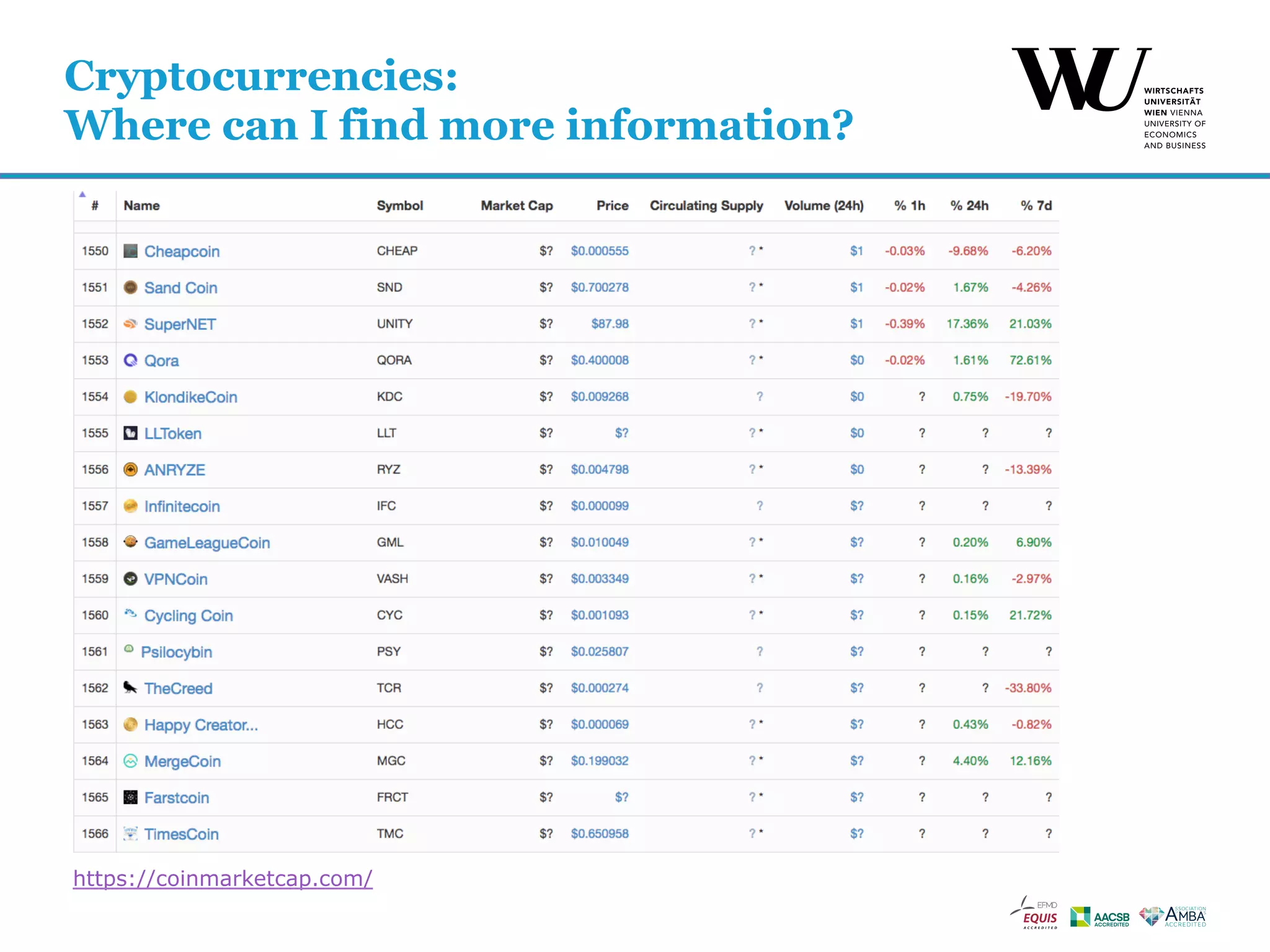
Value of all cryptocurrencies
NFTs are multi-use images that are stored on a blockchain. They can be used as art, a way to share QR codes, ticketing and many more things. The first breakout use was for art, with projects like CryptoPunks and Bored Ape Yacht Club gaining large followings. We also list all of the top NFT collections available, including the related NFT coins and tokens.. We collect latest sale and transaction data, plus upcoming NFT collection launches onchain. NFTs are a new and innovative part of the crypto ecosystem that have the potential to change and update many business models for the Web 3 world.
Each of our coin data pages has a graph that shows both the current and historic price information for the coin or token. Normally, the graph starts at the launch of the asset, but it is possible to select specific to and from dates to customize the chart to your own needs. These charts and their information are free to visitors of our website. The most experienced and professional traders often choose to use the best crypto API on the market. Our API enables millions of calls to track current prices and to also investigate historic prices and is used by some of the largest crypto exchanges and financial institutions in the world. CoinMarketCap also provides data about the most successful traders for you to monitor. We also provide data about the latest trending cryptos and trending DEX pairs.
The total crypto market volume over the last 24 hours is $172.65B, which makes a 34.94% increase. The total volume in DeFi is currently $27.22B, 15.77% of the total crypto market 24-hour volume. The volume of all stable coins is now $161.34B, which is 93.45% of the total crypto market 24-hour volume.
Almost. We have a process that we use to verify assets. Once verified, we create a coin description page like this. The world of crypto now contains many coins and tokens that we feel unable to verify. In those situations, our Dexscan product lists them automatically by taking on-chain data for newly created smart contracts. We do not cover every chain, but at the time of writing we track the top 70 crypto chains, which means that we list more than 97% of all tokens.
In January 2024 the SEC approved 11 exchange traded funds to invest in Bitcoin. There were already a number of Bitcoin ETFs available in other countries, but this change allowed them to be available to retail investors in the United States. This opens the way for a much wider range of investors to be able to add some exposure to cryptocurrency in their portfolios.
A cryptocurrency is a decentralized digital currency. It’s called cryptocurrency because all transactions are protected by cryptography. However, the revolutionary with cryptocurrencies is the blockchain technology. This makes them completely decentralized. In other words, there is no bank, company or intermediary. By removing all middlemen you avoid expensive fees, long waiting times and the need to trust a third party. With cryptocurrency, you send money faster, cheaper and easier.