- Are all cryptocurrencies mined
- Why do all cryptocurrencies rise and fall together
- Do all cryptocurrencies use blockchain
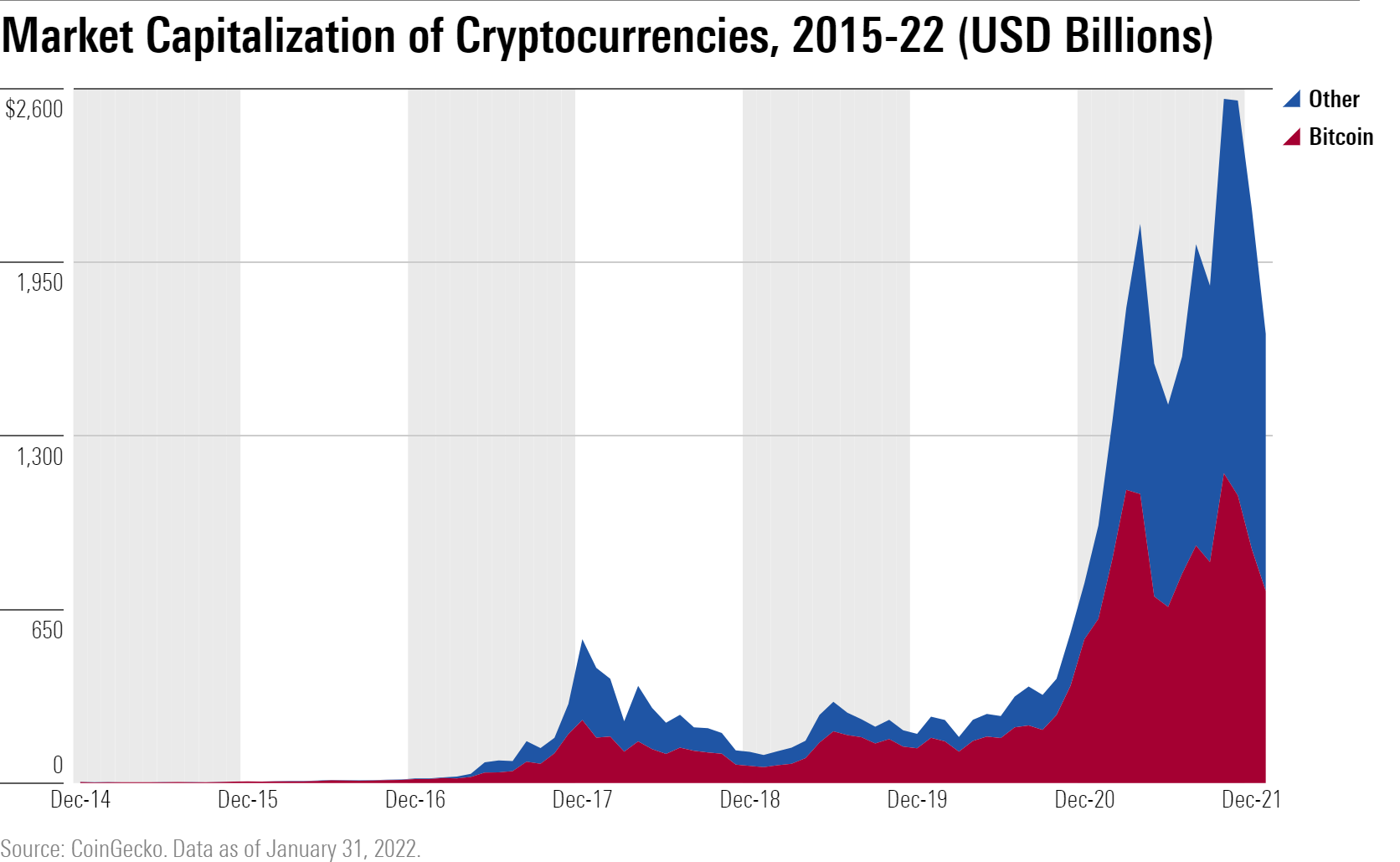
Market cap of all cryptocurrencies
Often, big changes in the crypto market cap are connected to significant events in the cryptocurrency and blockchain industry. Here are some of the most impactful events that resulted in major cryptocurrency market movements:
The top 10 cryptocurrencies are ranked by their market capitalization https://portal-credo.info/. Even though 10 is an arbitrarily selected number, being in the top 10 by market capitalization is a sign that the cryptocurrency enjoys a lot of relevance in the crypto market. The crypto top 10 changes frequently because of the high volatility of crypto prices. Despite this, Bitcoin and Ethereum have been ranked #1 and #2, respectively, for several years now.
When evaluating the crypto market capitalization, it’s important to have a historical perspective of how the size of the cryptocurrency market has changed over time. We provide historical crypto market cap data showing the total crypto market cap at the end of each year since 2013.
If you want to buy a particular cryptocurrency but don’t know how to do it, CoinCodex is a great resource to help you out. Find the cryptocurrency you’re looking for on CoinCodex and click the “Exchanges” tab. There, you will be able to find a list of all the exchanges where the selected cryptocurrency is traded. Once you find the exchange that suits you best, you can register an account and buy the cryptocurrency there. You can also follow cryptocurrency prices on CoinCodex to spot potential buying opportunities.
Are all cryptocurrencies mined
Yet, truth be told, most Americans still don’t know a lot about cryptocurrencies. A January survey conducted by Cobinhood, a cryptocurrency service platform, found that just 56% of the more than 1,000 people it surveyed knew what cryptocurrency is, and just 21% knew where to buy virtual currencies. A further 11% correctly guessed that there were more than 1,500 digital currencies to choose from, meaning the other 89% polled got it wrong. In other words, most folks don’t understand how any of this works, which is really scary considering how much money we’ve seen flow into cryptocurrencies over the past year.
A few months ago we attempted to tackle this lack of knowledge by examining the basics of cryptocurrencies, blockchain technology, and more recently cryptocurrency mining. Today, we’ll expand on this latter point by taking a closer look at the side-by-side differences of “mined” cryptocurrencies versus non-mined ones. And, as always, we’ll do so in plain English, without all the technical jargon.
While cryptocurrency mining can be profitable, it comes at a hefty price, costing miners thousands of dollars in hardware and electricity. In fact, the price of mining hardware is similar across the globe, which is why to have a competitive edge over other miners, an operation must have access to low-cost electricity.
In addition to electricity costs, massive mining farms may need to spend quite a bit of money on new equipment, which can go obsolete in a matter of months. Similarly, large mining farms may require cooling systems, since servers and graphics processing units can generate a lot of heat.
Kristin Ward is a versatile writer with a keen eye for detail and a passion for storytelling. With a background in research and analysis, she brings a unique perspective to her writing, making complex topics accessible to a wide range of readers. Kristin’s writing portfolio showcases her ability to tackle a variety of subjects, from personal finance to lifestyle and beyond.
Why do all cryptocurrencies rise and fall together
Find Lunar Block under “Products” and sign up. You’ll be asked to take a test about crypto first – among others things, it’s to see if you’re aware of the risks. You can learn more about the risks in the app before you take the test.
In conclusion, the fluctuations in cryptocurrency prices are influenced by various factors, including market sentiment, supply and demand dynamics, technological advancements, market manipulation, and regulatory conditions. Gaining a deeper understanding of these factors empowers you to navigate the crypto landscape more confidently. With this knowledge, you can make informed decisions and confidently engage in crypto trading using the Busha app.
So now, if someone asks you what makes crypto go up and down, you have the answers. However, crypto is still volatile and a hugely speculated space. Hence, global regulations, bans, and pro-crypto stances can also impact prices. Due to the plethora of price-influencing factors at play, you should always do your research before making any crypto-specific decision.
These psychological factors contribute to market volatility. Investors who act impulsively often face negative outcomes, especially during periods of extreme price fluctuations. Understanding these dynamics can help investors make more informed decisions and avoid falling victim to emotional trading.

Find Lunar Block under “Products” and sign up. You’ll be asked to take a test about crypto first – among others things, it’s to see if you’re aware of the risks. You can learn more about the risks in the app before you take the test.
In conclusion, the fluctuations in cryptocurrency prices are influenced by various factors, including market sentiment, supply and demand dynamics, technological advancements, market manipulation, and regulatory conditions. Gaining a deeper understanding of these factors empowers you to navigate the crypto landscape more confidently. With this knowledge, you can make informed decisions and confidently engage in crypto trading using the Busha app.
Do all cryptocurrencies use blockchain
Transactions follow a specific process, depending on the blockchain. For example, on Bitcoin’s blockchain, if you initiate a transaction using your cryptocurrency wallet—the application that provides an interface for the blockchain—it starts a sequence of events.
In the realm of crypto vs blockchain, the term “consensus mechanisms” often pops up. But what does it mean? Simply put, a consensus mechanism is the backbone of any blockchain network. It’s a set of coded rules that help network participants agree on the state of the digital ledger. Forget the days of manual audits; this is automated trust at its finest.
Cryptocurrencies pioneered in blockchain technology. And while blockchain has many advantages over traditional, centralized banking systems, some believe that there are drawbacks to certain aspects of blockchain technology, including scalability problems, slow block creation times, mining fees and double-spending attacks.
Once a block is closed, a transaction is complete. However, the block is not considered confirmed until five other blocks have been validated. Confirmation takes the network about one hour to complete because it averages just under 10 minutes per block (the first block with your transaction and five following blocks multiplied by 10 equals 60 minutes).
Byteball, another DAG-based network, relies on 12 so-called witness nodes that operate a main chain. These witness nodes are controlled by the developer to check the state of the DAG. While IOTA and Byteball claim their solutions are temporary, they’re problematic in terms of centralization, since both of them are, in a sense, operated by a central authority.